Welcoming Whatever Arises

    —
November 10, 2015

Welcoming Whatever Arises

Richard Miller November 10, 2015

Richard Miller is one of the world’s leading authorities on the practice of Yoga Nidra—a deep form of yogic meditation and relaxation. With Sounds True, Richard has published iRest Meditation: Restorative Practices for Health, Resiliency, and Well-Being, a comprehensive audio toolkit for the contemporary use of Yoga Nidra practices. In this episode of Insights at the Edge, Tami Simon and Richard talk about the use of Yoga Nidra to treat trauma—especially among returning military personnel. They also speak on the core ideas behind iRest, as well as events that led to its development. Finally, Richard guides listeners through a full iRest meditation practice designed for the reconciliation of seemingly opposite thoughts and emotions. (68 minutes)

Richard Miller, PhD, is a master of yoga and meditation who holds a doctorate in clinical psychology. Recognized as a leading authority on the practice of Yoga Nidra, he has founded and cofounded several key organizations including the International Association of Yoga Therapy, the Institute for Spirituality and Psychology, and the Integrative Restoration Institute. Currently he is helping research the efficacy of iRest, a healing technique Miller developed based on Yoga Nidra with diverse populations. He lectures and teaches this method across the globe.

Author photo © DouglasSandberg2021

600 Podcasts and Counting…

Subscribe to Insights at the Edge to hear all of Tami’s interviews (transcripts available too!), featuring Eckhart Tolle, Caroline Myss, Tara Brach, Jack Kornfield, Adyashanti, and many more.

Meet Your Host: Tami Simon

Founded Sounds True in 1985 as a multimedia publishing house with a mission to disseminate spiritual wisdom. She hosts a popular weekly podcast called Insights at the Edge, where she has interviewed many of today's leading teachers. Tami lives with her wife, Julie M. Kramer, and their two spoodles, Rasberry and Bula, in Boulder, Colorado.

Photo © Jason Elias

Also By Author

Welcoming Whatever Arises

Richard Miller is one of the world’s leading authorities on the practice of Yoga Nidra—a deep form of yogic meditation and relaxation. With Sounds True, Richard has published iRest Meditation: Restorative Practices for Health, Resiliency, and Well-Being, a comprehensive audio toolkit for the contemporary use of Yoga Nidra practices. In this episode of Insights at the Edge, Tami Simon and Richard talk about the use of Yoga Nidra to treat trauma—especially among returning military personnel. They also speak on the core ideas behind iRest, as well as events that led to its development. Finally, Richard guides listeners through a full iRest meditation practice designed for the reconciliation of seemingly opposite thoughts and emotions. (68 minutes)

Yoga Nidra—The Sleep Yoga

Tami Simon speaks with Richard Miller, a master of yoga and meditation who holds a doctorate in clinical psychology. He is recognized as a leading authority on the practice of yoga nidra, and is currently teaching iRest, a healing technique he developed based on deep relaxation and meditative inquiry. Richard has worked with Sounds True to create an integrated book-and-audio learning program called Yoga Nidra. Richard discusses the stages of yoga nidra, how the practice is a path to realization and self-inquiry, the nature of paradoxical sleep, and his ongoing work with soldiers suffering from post-traumatic stress disorder through the practice of yoga nidra. (61 minutes)

You Might Also Enjoy

[ENCORE EPISODE] Yongey Mingyur Rinpoche: “In Lo...

A nine-year-old asks his father how to fight his panic attacks. His father says: don’t.

That answer set the course of Yongey Mingyur Rinpoche’s life—and, twenty-seven years later, sent him out of his monastery in the middle of the night.

In this encore presentation, Tami Simon speaks with Rinpoche—beloved Tibetan Buddhist teacher in the Kagyu and Nyingma lineages, guiding teacher of the Tergar meditation community, and author of In Love with the World—about the four-and-a-half-year wandering retreat that nearly killed him, and the teaching he calls “adding wood to the fire.”

Raised as a tulku with attendants at his side, he left at 36 with almost no money. Within weeks he was begging for food, sleeping on a train station floor, and severely ill—and when he believed he was dying, he chose not to reach for rescue.

Join Tami and Mingyur Rinpoche to explore:

  • “Adding wood to the fire”: how obstacles become opportunity, and poison becomes medicine
  • His father’s teaching on the sky: why no storm can change the nature of awareness
  • Why banging your head against the wall isn’t courage, and what acceptance actually opens
  • The bardo as everyday experience: job loss, breakups, falling asleep, and the gaps between
  • The four steps of the dying practice—offering, dedication, intention, and prayer
  • Child luminosity meeting mother luminosity, and what he directly experienced that night
  • Why he titled the book In Love with the World: “If you love the world, world loves you back”

Rinpoche is now partnering with Sounds True on a brand-new course, Wild World, Steady Mind: 21 Days to Embrace Modern Reality with Clarity and Calm, filmed on location at his monastery in Nepal.

Listen now, and find the sky behind the storm. →

Just One Question | Craig Foster: Why am I Afraid of N...


We’ve all felt it: the excitement of heading out into nature, followed almost immediately by “wow, that’s a lot of bugs” energy. Turns out, that’s not just you being an urban dweller — it’s a genuine evolutionary paradox, and this week’s guest has spent his whole career living inside it.

Craig Foster is the filmmaker and naturalist behind My Octopus Teacher, and in this episode he tackles a question Tami poses about her own experience: why can she melt into a deep, connected feeling about nature from the safety of meditation, but feel completely terrified and separate the moment she’s actually standing in a wilderness with wolves, cougars, or sharks nearby?

Craig’s answer reframes the whole thing. He explains that we’re each carrying millions of years of “wild” memory, hardwired into who we are, while our conscious, modern selves have only had a few generations to adjust to industrial life. The fix isn’t a heroic leap into the deep wild — it’s small, steady reconnection.

A few takeaways from Craig’s answer:

  • We’re designed for wildness — our discomfort with it is a mismatch, not a flaw
  • Reconnection starts small: get to know the trees, insects, and animals right around your house
  • Comfort with the wild builds faster than you’d expect — sometimes in a matter of months
  • Even one backyard animal can teach you something profound about yourself and the natural world

If this got you thinking about your own relationship with the wild, you’ll want to hear the whole conversation — Craig and Tami go even deeper into what it means to live an amphibious life, split between our tame and wild selves.

Taken from the full Insights at the Edge conversation with Craig Foster. Find the complete interview in this feed or at soundstrue.com.

This episode is sponsored by Omega Institute, a global gathering hub for lifelong learning and spiritual exploration. Omega offers weekend workshops, special events, rest and rejuvenation retreats, professional training, online learning, and more. Discover what calls to you at eomega.org/true.

Lodro Rinzler: Basic Goodness in a World on Fire


How do you hold true to your convictions to be good in a world that’s on fire?

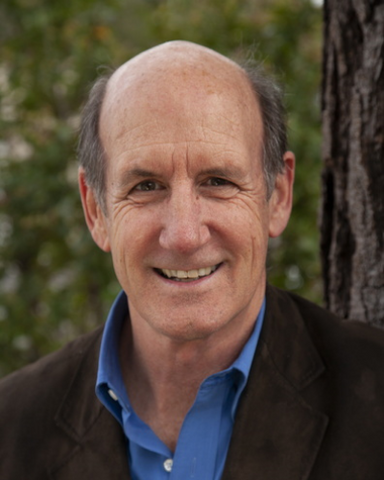
This week, Tami Simon speaks with Lodro Rinzler—Buddhist meditation teacher, founder of the Basic Goodness Collective, and author of seven books including the international bestseller The Buddha Walks into a Bar—about his new book, You Are Good. You Are Enough: Free Yourself from the Trap of Doubt and Return to Basic Goodness. Together, they move through the book’s three arcs: seeing the goodness in ourselves, in others, and in society itself.

Join Tami and Lodro to explore:

  • The concept of basic goodness—what it actually means, where it comes from in the Tibetan Buddhist tradition, and why you don’t have to be a Buddhist to recognize it in yourself
  • How capitalism profits from the lie of not-enoughness—and what it would mean to collectively stop believing it
  • The “trap of doubt”: that insidious inner voice that keeps us striving, comparing, and withholding self-acceptance
  • How to extend compassion toward people who drive us crazy—including world-threatening politicians—without excusing harm or collapsing into Pollyanna thinking
  • The parrot and the forest fire: a jataka tale about what it means to name what’s broken and show up anyway
  • Chögyam Trungpa Rinpoche’s teaching that seeing the phenomenal world as sacred is “the first and last practice of all”
  • A closing guided meditation to help listeners touch basic goodness in their own direct experience

Whether you’ve been carrying shame for decades or are simply exhausted by a world that feels on fire, Lodro offers something rare: not a pep talk, but a genuine shift in view.

Listen now and find your way back to what was always there. →

This conversation offers genuine transmission—not just concepts about awakening, but the palpable presence of realized teachers exploring the growing edge of spiritual understanding together. Originally aired on Sounds True One.